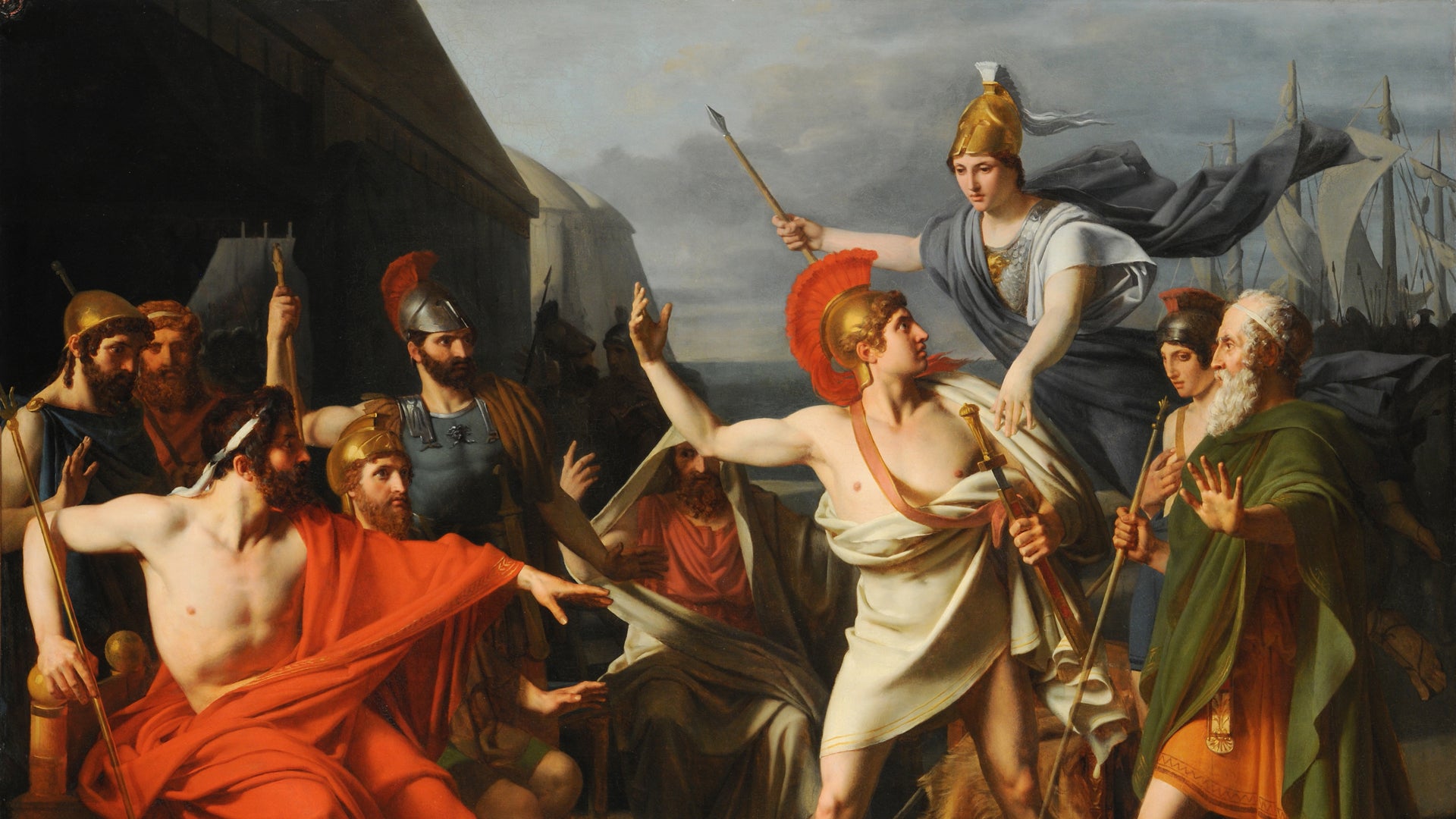
waynethomasyorke.com – The Iliad, an epic poem attributed to the ancient Greek poet Homer, is a timeless narrative that delves into the final years of the Trojan War, a legendary conflict between the city of Troy and the Achaeans (Greeks). At the heart of this epic tale is the wrath of Achilles, a pivotal theme that drives the plot and explores the complexities of heroism, honor, and human emotion.
The Catalyst: The Dispute Over Briseis
The wrath of Achilles is ignited by a dispute with Agamemnon, the commander-in-chief of the Achaean forces. After the Greeks capture the city of Chryse, Agamemnon takes the daughter of the city’s priest, Chryses, as his prize. However, Apollo, the god to whom Chryses is a priest, demands her return to appease his anger. Agamemnon reluctantly agrees but demands compensation for his loss. He seizes Briseis, a captive woman who has been awarded to Achilles, sparking Achilles’ fury.
The Consequences of Achilles’ Wrath
In his rage, Achilles withdraws from the battle, depriving the Greeks of their greatest warrior. This decision has dire consequences for the Achaeans, as the Trojans, led by the formidable Hector, gain the upper hand. The Trojans push the Greeks back to their ships, and it seems as though the Achaeans will be defeated.
The Role of the Gods
The Iliad is not just a tale of human conflict but also a story that involves the gods. The gods take sides, intervene in battles, and influence the fates of mortals. Zeus, the king of the gods, oversees the conflict, often swayed by the pleas of other deities. Athena, a patron of the Achaeans, and Apollo, who favors the Trojans, are among the divine figures who play significant roles in the narrative.
The Death of Patroclus and Achilles’ Return
The turning point in the narrative comes with the death of Patroclus, Achilles’ close companion. Dressed in Achilles’ armor, Patroclus joins the battle in an attempt to turn the tide in favor of the Greeks but is killed by Hector. The death of Patroclus devastates Achilles, who then decides to re-enter the fray, driven by a desire for revenge.
The Fall of Hector
Achilles’ return to battle is marked by unparalleled ferocity. He slaughters countless Trojans before finally facing Hector in a climactic duel. Achilles emerges victorious, killing Hector and desecrating his body by dragging it behind his chariot. This act of vengeance, while satisfying Achilles’ wrath, also highlights the tragic consequences of his anger.
The Lamentations and the Ransom of Hector
The Iliad concludes with the ransom of Hector’s body by his father, Priam, to Achilles. This moment of human connection and compassion serves as a poignant end to the narrative. Achilles, moved by Priam’s grief, returns Hector’s body for proper burial, recognizing the shared humanity between enemies.
Conclusion
The Iliad of Achilles is a profound exploration of the human condition, set against the backdrop of war. Through the wrath of Achilles, Homer examines the themes of pride, honor, and the devastating impact of anger. The epic serves as a timeless reminder of the complexities of heroism and the tragic consequences of conflict.