Raven: Daughter of Darkness – Powers and Abilities

waynethomasyorke.com – Raven, a powerful and enigmatic character from the DC Comics universe, is best known as a member of the Teen Titans. With her mysterious origins and complex personality, Raven stands out as a unique and compelling superhero. Her struggle to balance her dark lineage with her desire to do good makes her story both intriguing and relatable.

Origin and Background

Raven, whose real name is Rachel Roth, is the daughter of a human mother, Arella, and the demon Trigon. Born in the interdimensional realm of Azarath, she was raised by pacifist monks who taught her to control her emotions to suppress her demonic side. Despite this upbringing, Raven is constantly haunted by the threat of her father’s influence. She eventually joins the Teen Titans, seeking both refuge and a means to fight against evil, including her father.

Powers and Abilities

Raven possesses a wide array of magical and psychic abilities. Her powers include telekinesis, teleportation, and the ability to manipulate shadows and emotions. She can enter the astral plane, allowing her to project her soul-self, a manifestation of her spirit that can interact with the physical world. Her empathic abilities enable her to sense and alter the emotions of others, though she must remain vigilant in managing her own emotions to prevent her darker side from taking over.

Themes and Character Development

Raven’s character is deeply rooted in themes of inner conflict and redemption. Her constant battle against her demonic heritage and her quest for acceptance and identity resonate with readers who understand the struggle of reconciling different aspects of oneself. Throughout her adventures with the Teen Titans, Raven evolves from a withdrawn, aloof figure into a steadfast and loyal friend, demonstrating growth and resilience.

Conclusion

Raven, the Daughter of Darkness, captivates fans with her rich backstory and complex personality. Her journey of self-discovery and her fight against the darkness within make her an enduring figure in the DC Comics universe. As she continues to appear in various comic series, animated shows, and live-action adaptations, Raven remains a symbol of strength and hope, proving that even in darkness, there is potential for light.

Negan: The Bat-Wielding Leader – Origins and Background

waynethomasyorke.com – Negan, a central figure in the “The Walking Dead” universe, is renowned for his charismatic yet ruthless leadership style. Known as “The Bat-Wielding Leader” due to his infamous weapon, Lucille, a barbed-wire-wrapped baseball bat, Negan is a character who commands both fear and respect. His complex personality and strategic mind make him one of the most compelling antagonists in the series.

Origins and Background

Negan was introduced in the comic series “The Walking Dead” by Robert Kirkman and Charlie Adlard, first appearing in issue #100. Before the apocalypse, Negan was a high school coach with a tumultuous personal life. The collapse of society allowed him to rise to power, leading a group known as the Saviors. His leadership style is a mix of intimidation and charisma, drawing followers who fear and admire him.

Leadership of the Saviors

As the leader of the Saviors, Negan enforces a strict regime where communities under his control must provide resources in exchange for protection. His rule is marked by brutal enforcement and psychological manipulation, but also a twisted sense of order and stability. Negan’s ability to maintain control in a chaotic world speaks to his strategic mind and understanding of human nature.

Lucille: The Iconic Weapon

Lucille, Negan’s bat, is more than just a weapon; it is a symbol of his authority and the brutal consequences of defying him. Named after his late wife, Lucille is wielded with both affection and menace, serving as a constant reminder of Negan’s dominance. The bat’s use in key moments of the series has solidified its place as an iconic symbol of Negan’s character.

Complex Personality

Negan’s character is defined by his complexity and contradictions. While he is undeniably ruthless, he also exhibits moments of empathy and humor. His interactions with other characters reveal a man who, despite his violent methods, believes in maintaining civilization, albeit through fear. This duality makes Negan a fascinating character, capable of both despicable acts and surprising depth.

Impact on “The Walking Dead”

Negan’s introduction to “The Walking Dead” marked a significant shift in the series, both in the comics and the television adaptation. His presence brought new challenges and dynamics to the story, forcing other characters to confront moral dilemmas and adapt to his authoritarian rule. Negan’s influence extends beyond his actions, as he challenges the protagonists’ ideals and forces them to confront the harsh realities of their world.

Conclusion

Negan, “The Bat-Wielding Leader,” remains one of the most memorable figures in “The Walking Dead” universe. His blend of charisma, brutality, and complexity captivates audiences, making him a standout character in a world filled with moral ambiguity. Through Negan, the series explores themes of power, survival, and the thin line between heroism and villainy, ensuring his legacy as a pivotal character in the narrative of post-apocalyptic survival.

Norman Bates: The Psycho – The Creation of a Horror Icon

waynethomasyorke.com – Norman Bates, the infamous character from Alfred Hitchcock’s classic film “Psycho,” is one of the most chilling figures in cinematic history. Known for his unsettling demeanor and complex psychological profile, Norman Bates has become synonymous with horror and suspense. This article delves into the character’s origins, psychological intricacies, and lasting impact on the thriller genre.

The Creation of a Horror Icon

Norman Bates was first introduced in Robert Bloch’s 1959 novel “Psycho,” which was later adapted into the 1960 film by Alfred Hitchcock. Inspired by real-life serial killer Ed Gein, Bloch crafted a character whose seemingly ordinary exterior concealed a deeply disturbed mind. Anthony Perkins’ portrayal of Norman Bates in the film brought the character to life, cementing his status as a horror icon.

A Troubled Past

Norman Bates’ life is marked by a troubled past, dominated by an overbearing and manipulative mother. Raised in isolation, Norman’s relationship with his mother was both toxic and consuming. Her oppressive influence left him unable to form healthy relationships and contributed to the development of his split personality, where he adopts his mother’s persona to cope with stress and guilt.

The Bates Motel

The Bates Motel, a secluded and eerie establishment, serves as the primary setting for Norman’s story. Its isolation mirrors Norman’s own detachment from reality and society. The motel becomes the scene of his psychological unraveling, where guests unknowingly become entangled in his dark and twisted world. The setting plays a crucial role in building suspense and tension throughout the narrative.

Psychological Complexity

Norman Bates is a character defined by his psychological complexity. His dissociative identity disorder manifests as the “Mother” personality, which takes control during moments of stress or anger. This condition blurs the line between Norman’s identity and his mother’s, leading to a series of tragic and violent events. His character challenges audiences to explore themes of mental illness, identity, and the impact of childhood trauma.

Legacy and Influence

Norman Bates’ influence extends far beyond the “Psycho” franchise. His character has become a template for the psychologically complex villain, inspiring countless films and television shows. The suspense and horror elements introduced by Hitchcock’s adaptation have left an indelible mark on the thriller genre, influencing directors and writers to explore the darker aspects of human psychology.

Conclusion

Norman Bates, the Psycho, remains a quintessential figure in the world of horror and suspense. His story is a haunting exploration of mental illness, identity, and the powerful influence of family. Through his character, audiences are drawn into a world of psychological terror, where the line between sanity and madness is perilously thin. Norman Bates’ legacy endures as a testament to the enduring power of storytelling and the chilling depths of the human mind.

Madame Mim: Disney’s “The Sword in the Stone”

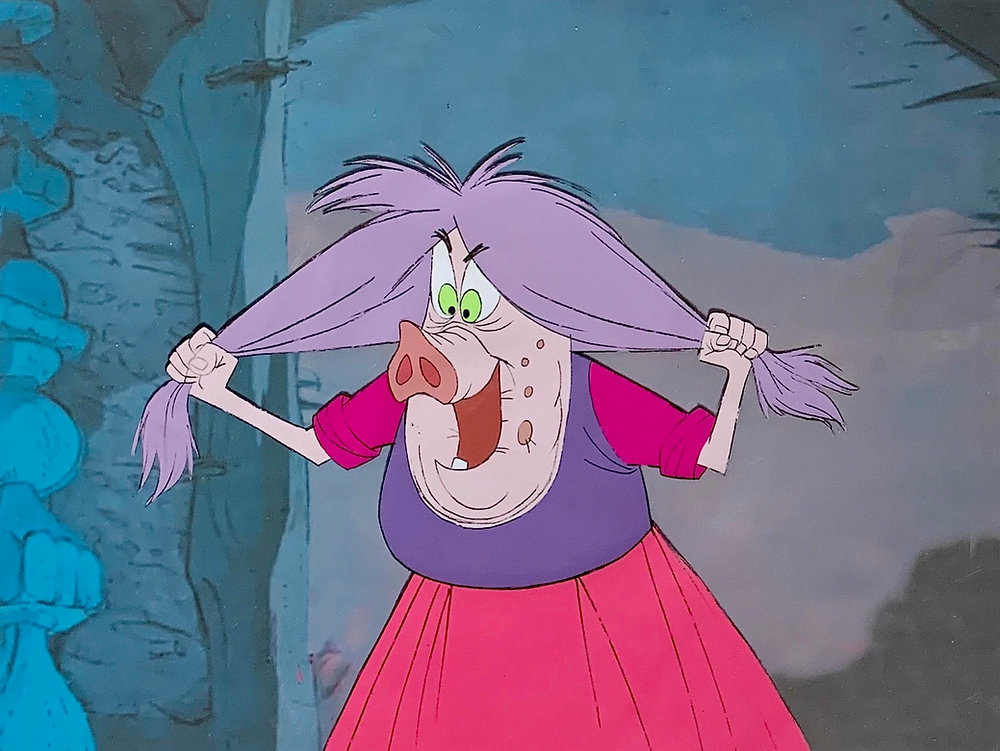
waynethomasyorke.com – Madame Mim, the whimsical and eccentric antagonist of Disney’s 1963 animated film “The Sword in the Stone,” is a character known for her chaotic magic and playful villainy. As a powerful yet mischievous witch, she presents a humorous counterpoint to the wise and benevolent Merlin. This article explores Madame Mim’s origins, her role in the story, and the themes she embodies as a classic Disney villain.

Origins and Characteristics

Madame Mim first appeared in T.H. White’s novel “The Sword in the Stone,” part of the larger work “The Once and Future King.” In the Disney adaptation, she is portrayed as a colorful and lively character with a penchant for causing trouble and delighting in her own wickedness. Her appearance—wild hair, a mischievous grin, and a penchant for purple—reflects her chaotic nature, and her magical abilities allow her to transform into various forms, adding to her unpredictable persona.

The Duel with Merlin

One of the most memorable scenes featuring Madame Mim is her magical duel with Merlin. This sequence showcases her playful yet competitive nature as she and Merlin transform into various animals, each trying to outwit the other. Unlike Merlin, who uses his magic for teaching and protection, Madame Mim revels in using her powers for mischief and chaos. The duel highlights their contrasting philosophies and serves as a comedic yet pivotal moment in the film.

Themes of Chaos and Mischief

Madame Mim embodies themes of chaos and mischief, relishing in the unpredictability of her magic. Her character offers a light-hearted exploration of the allure and dangers of unchecked power. Unlike more sinister villains, Madame Mim’s evil is tempered by her comedic antics and whimsical personality, making her less threatening and more entertaining. Her interactions with Merlin emphasize the balance between wisdom and folly, order and chaos.

Cultural Impact and Legacy

While not as prominent as other Disney villains, Madame Mim has left a lasting impression due to her unique character and memorable scenes. Her playful villainy and humorous rivalry with Merlin have made her a beloved figure among fans of “The Sword in the Stone.” Madame Mim’s character serves as a reminder of the importance of balance and the consequences of using power irresponsibly.

Conclusion

Madame Mim stands out as a playful and mischievous villain in Disney’s “The Sword in the Stone.” Her chaotic nature and magical antics provide a humorous foil to Merlin’s wisdom, making her a memorable character in the Disney universe. Through her whimsical villainy, Madame Mim continues to entertain audiences, highlighting the timeless appeal of magic, mischief, and the enduring battle between order and chaos.